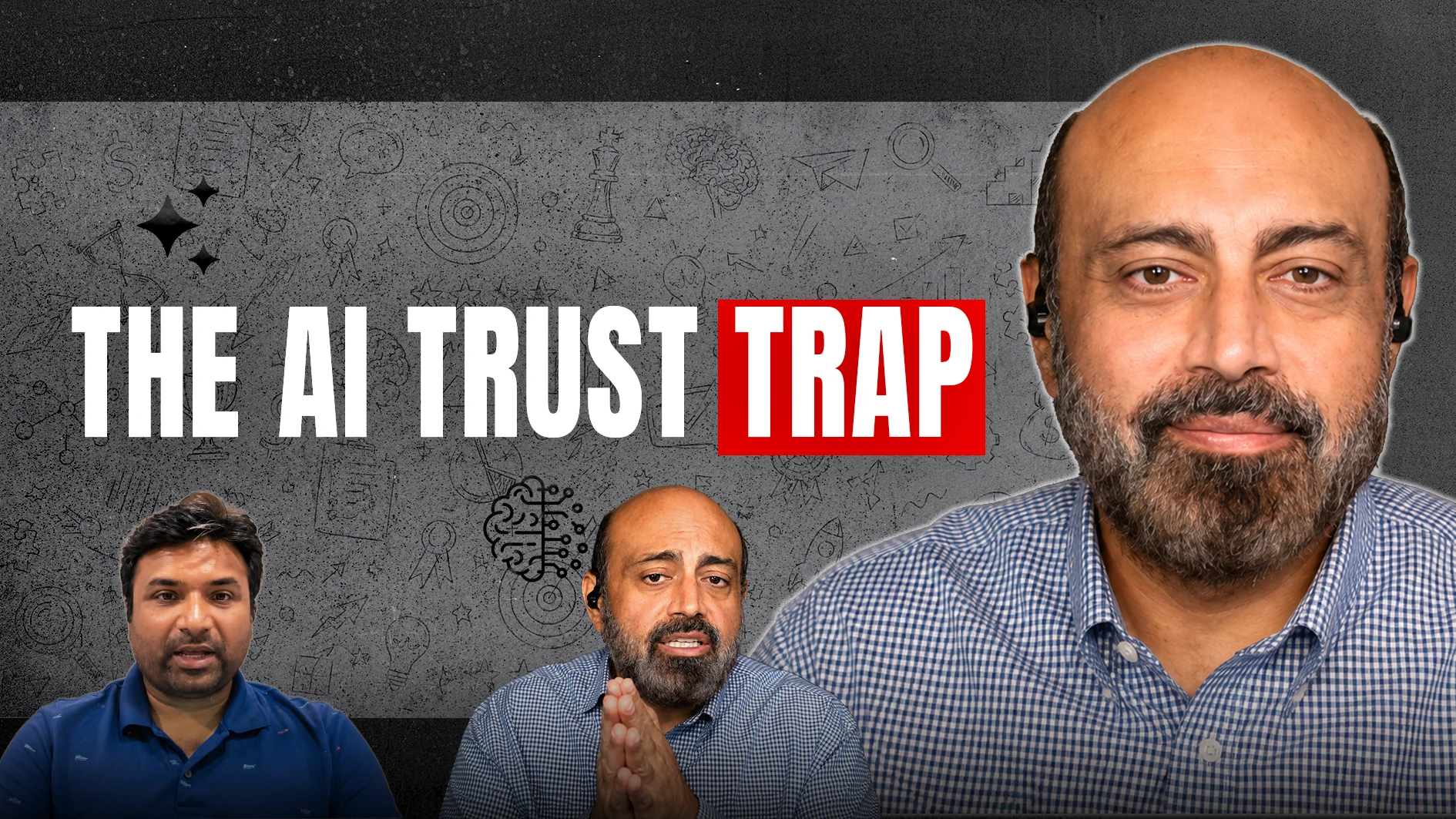
Most sales leaders treat compliance as the tax you pay for selling into regulated industries: a recorded call, an approved script, a slow legal review. Dr. Deepak Bhootra, who spent nearly three decades at HP, Capgemini, and Sun before founding Rise Up, argues the opposite on Revenue Under Pressure. The recording and the script aren't obstacles to trust, they're evidence of it, and reps who resent them usually have a trust problem that has nothing to do with compliance.
In this article
- AI is the friend that can mislead you, or the one that changes your life
- Recorded calls are proof of trust, not the enemy of it
- A script is a guardrail, not a cage
- Coach the middle 50%, not just your top performers
- Copy-pasting an RFP clause can cost you your job
- Your name is the asset. The logo just lends you credit
- FAQ
AI is the friend that can mislead you, or the one that changes your life
Twelve years ago, Bhootra finished a book and showed it to his best friend, someone he'd known since grade four, who'd stood at his wedding and watched him stand at his. The verdict came back fast: "It is absolutely shit, crap." Bhootra shelved it. A publisher later read the same manuscript and asked why he'd hidden a great book from the world.
Bhootra tells that story because, in his words, it is the whole problem with AI in one anecdote.
I look at AI as that friend that can either mislead you or can change your life.Deepak Bhootra
His friend wasn't lying. He was being a friend, telling Bhootra what felt true in the moment rather than what was actually true about the book. Bhootra calls this the sycophant problem, and sees the same pattern when reps lean on AI mid-deal: ask a tool whether a proposal is strong, and it can validate you into a corner just as easily as a well-meaning friend can. The fix isn't to distrust the tool, it's to want an advocate instead of a sycophant, one that challenges you and explains why.
That distinction matters more in regulated selling than almost anywhere else, because an AI-flattered assumption rarely stays small. It becomes a clause copied into an RFP without legal review, or a claim made on a call nobody checked before it went out.
Buyers are already treating AI output as something that needs a human check. In a 2026 Gartner survey of 645 B2B buyers, 69% said they preferred to validate AI-generated insights with a sales representative. The same research found buyers were slightly more likely to encounter misleading information from generative AI than from a rep, 51% versus 49%. The useful role for AI is not to sound certain. It is to accelerate work while making the point of human accountability unmistakable.
The Guardrail Trust Test
Before using an AI-assisted claim, ask: would I make this same statement if the buyer, my legal team, and a regulator replayed it together? If the answer changes with the audience, the claim is not ready.
Recorded calls are proof of trust, not the enemy of it
Ask most reps how they feel about having every call recorded and every claim reviewed, and you'll hear some version of the same complaint: it makes it harder to sound human. Bhootra pushes back immediately. If a rep treats compliance as punishment, he says, the problem was never compliance. The problem is that trust was already missing somewhere else in the organization.
Recording exists to guard against specific things: commitments made off script, most-favored-customer clauses, the fine print that turns into a lawsuit later. It was never about policing tone or personality. Bhootra's framing for reps is direct: we live in an era where everything is recorded anyway, so the real question isn't why the call is being kept, it's what you're protecting yourself and the customer from if something goes wrong.
What's changed the calculation, he argues, is AI. As more of a rep's thinking gets outsourced to a tool mid-conversation, a recorded call stops being just a record of words and starts being a record of judgment. That should make leaders more comfortable with recording, not less. A shortcut taken with AI can undermine trust faster than any recording ever could, because the recording only shows what happened. The AI shortcut is what caused it.
A script is a guardrail, not a cage
The same objection shows up in a different costume in pharma, banking, and healthcare: reps required to stay on approved messaging, with real legal exposure if they wander off it. Bhootra's answer starts with a courtroom image. Read a genuinely disgusting passage aloud in flat monotone, and the words lose their charge. Read an innocent sentence with the wrong inflection, and it can sound scandalous. The words were never the variable. Tone and delivery were.
Approved messaging, in other words, is the what. What separates a rep who wins is the how: the pacing, the read on the room, the moment to lean forward because something shifted in the customer's body language. None of that is something AI can supply. Scripts give reps guardrails, and Bhootra's view is that guardrails are a gift, not a leash, because they keep everyone focused on what actually matters, winning the deal, instead of a compliance issue that muddies it later.
Thank God for a quick guardrail. Guardrails force you to only talk about things that matter because your goal is to win the deal, not create a compliance issue later that muddies the deal and you don't win it.Deepak Bhootra
He has a number attached to what happens when a team ignores that advice. Bhootra worked a $900 million outsourcing deal in South Africa, pursued by a consortium of vendors. Two of them were disqualified at the very end over side agreements made outside the approved terms, discovered late, after years of effort and millions in bid costs. Staying inside the boundaries isn't a compliance tax on the deal. It's what makes the deal survivable.
Where AI helps, and where human judgment still decides the deal
Illustrative, based on themes Deepak Bhootra raises, not measured data
Illustrative proportions: AI can draft and accelerate, but nuance, tone, and legal judgment stay with the human.
Coach the middle 50%, not just your top performers
Every sales org sorts into roughly the same curve, and regulated teams are no exception even though the reps in them tend to be more vetted and less run of the mill than average to begin with. Bhootra's shorthand: 25% rock stars, 25% at the bottom, and what he calls "the middling middle" in between. Pareto's principle shows up regardless of how carefully you hired.
Where he breaks from conventional coaching advice is what to do with that curve. In a fast-moving startup, coaching the middle mostly buys volume: more reps closing more deals faster. In a regulated environment, with sales cycles that run quarters or years rather than weeks, it buys something scale can't replace: a rep who has been on a deal long enough to carry the institutional knowledge and customer intimacy that makes the next renewal possible.
The math favors the middle even though it's the group leaders instinctively under-invest in. Top performers are sticky and hit their number regardless. Bottom performers get managed out either way. It's the middle 50% most likely to leave, and losing one mid-deal on an eighteen-month negotiation costs more than a headcount, it costs the relationship the customer already built with that person. Bhootra calls the middle the farming class of a regulated sales org, the ones who nurture a relationship long enough for it to compound.
| Group | What it looks like | The right move |
|---|---|---|
| Top 25% | Rock stars. Exceed goal on their own and stay sticky to the organization regardless of attention. | Don't over-invest here. They'll survive, and stay, with or without extra coaching hours. |
| Middle 50% | The "middling middle." Carry the tribal knowledge and customer intimacy built over long, multi-quarter or multi-year deals. | Coach hardest here. Keep them resourced and interlocked with the account, this is the group most likely to walk mid-deal. |
| Bottom 25% | Below goal, and likely to be managed out of the organization regardless of coaching investment. | Don't spend scarce coaching time trying to save this group at the expense of the middle. |
The 25/50/25 sales team, and where the deal risk sits
Distribution as described by Deepak Bhootra, not measured attrition data
In long regulated deals, Bhootra argues the middle 50% carries the most institutional knowledge and the highest flight risk.
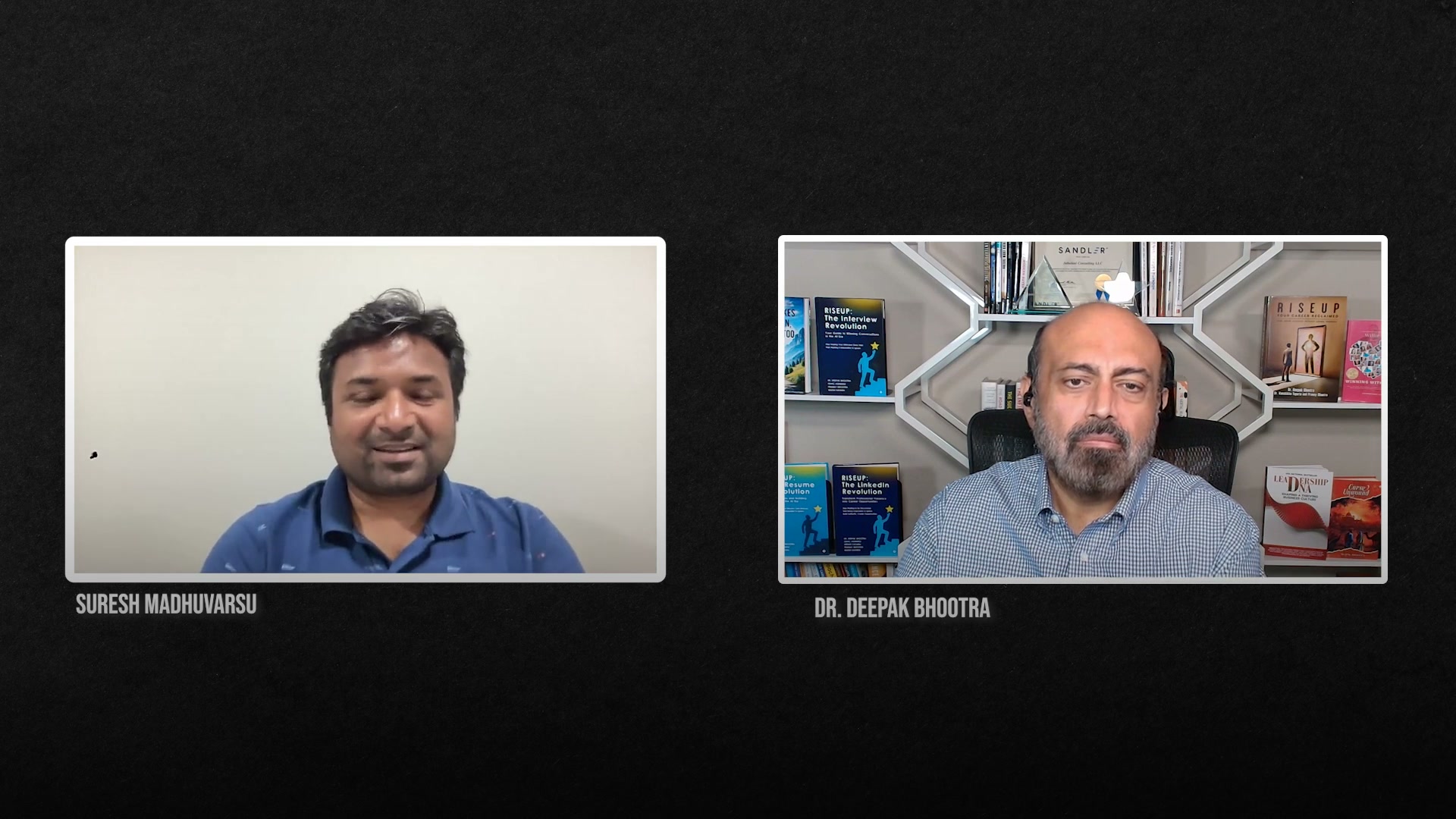
Copy-pasting an RFP clause can cost you your job
Bhootra tells this story to make one point: nuance is where regulated deals actually break. In a review, he once asked a rep how they planned to respond to a most-favored-customer clause in an RFP. The rep's plan was to reuse legal language from a previous response because it looked close enough. Bhootra sent it to legal instead.
The warning applies just as directly to AI. A tool will confidently generate an answer to a legal clause, and it's just as easy to paste that answer in without a second thought as it is to reuse an old RFP response. Bhootra's rule: if using AI on a regulated response could create reputational harm, involve legal anyway. Full stop. Legal will not defend a shortcut after the fact, he says. It will make an example of it.
Over his career, Bhootra estimates he has seen roughly 55 salespeople lose their jobs, and the single biggest reason was side letters: promises made outside approved terms to close a deal faster, discovered later once a customer's own document made clear what had actually been agreed to.
When your mistake causes other people to lose their jobs, I want you to look at the bigger picture. It's not about you lining your pocket. It's about you lining your pocket with the way that makes everyone feel part of the team, protected, and growth is secure for everyone.Deepak Bhootra
The story he tells to explain why he feels this so strongly is personal. At 26, Bhootra was on a pre-sales team building a product for a Southeast Asian petrochemical company entering South Africa, working directly with independent fuel station franchisees who had to sign off on compliance. The project was cancelled after six months when the product didn't meet the compliance requirements, the company was sued, and the next day six people, Bhootra included, were let go, not for writing the faulty document, but because the company could no longer afford to keep the team. His wife was pregnant at the time. Nearly three decades later, he says, it still hurts.
Your name is the asset. The logo just lends you credit
Bhootra spent close to thirty years across HP, Capgemini, and Sun before going independent, and he's candid about what those years taught him and what they quietly hid. The first lesson: slow down and map the system before you sell into it. Big companies are complex, and reps who arrive convinced they'll wow everyone into fast action usually stall because they never learned who owns what.
The second lesson runs the other way. Reps who wait for every escalation and every sign-off before moving lose momentum. Bhootra says the best sellers build informal alignment ahead of time, the same coalition-building they'd use with a buyer's committee, turned inward on their own organization, so that by the time a signature is needed, everyone required has already said yes.
What those years also mask, Bhootra says, is how much of a rep's credibility travels with the logo rather than the person. His first cold call as an independent consultant got a blunt response: "Who are you? What are you?" For years, introducing himself as being from HP meant people weren't asking for Deepak, they were asking for HP. Going independent meant starting the trust-building exercise over from zero. He has a phrase for the trap that catches people at that transition: founder and flounder. "That L is the difference," he says. The habits that got rewarded inside a big company don't transfer. There's no cavalry behind you. You are the cavalry.
Asked which trait he can teach and which he can't, Bhootra didn't hesitate. Curiosity, the technique of asking the right questions, is teachable. What isn't is the instinct to genuinely celebrate when a customer gets the win you promised them, most reps don't understand what that moment means to a buyer. That's self-learned, or not learned at all, and it's the same idea running through the whole conversation. Scripts, recordings, compliance, coaching, personal brand: all of it is scaffolding. What decides whether a regulated deal closes, and stays closed, is whether the buyer believes the person across the table cares if they win.
Key takeaways
- Compliance and call recording are evidence of trust, not obstacles to it. Reps who fear being recorded usually have a trust problem elsewhere in the org.
- Approved messaging is a guardrail, not a ceiling. Authenticity comes from tone and delivery, neither of which AI can supply for you.
- In long, regulated sales cycles, the middle 50% of the team carries the most deal risk and institutional knowledge. Coach there first.
- Nuance is where AI-assisted work gets dangerous fastest. Reused RFP language or an AI-drafted clause still needs a human to check it.
- Reputational damage outlasts the deal itself. Bhootra has seen roughly 55 salespeople lose their jobs over side letters alone.
- A company logo lends you credibility, but it doesn't transfer when you leave. Build a name that survives the introduction.
FAQ
Does call recording and compliance monitoring actually hurt sales rep trust?
Not in Bhootra's experience. He argues the opposite: reps who resent being recorded usually have a trust problem elsewhere in the org, not a compliance problem. Recording exists to protect specific things, commitments made, most-favored-customer clauses, not to police a rep's personality on the call.
How do you coach the middle 50% of a sales team?
Treat the middle as the highest-leverage group, not the top or bottom performers. In regulated environments with long sales cycles, the middle carries the tribal knowledge and customer relationships built over quarters or years, and it's the group most likely to leave if under-coached. Keep them resourced instead of rotating people in and out.
Is sales burnout the company's fault or the rep's fault?
Bhootra "pleads the fifth" on this one, but lands somewhere specific: companies build the fire, in the form of workloads no other role would accept without negotiating them down, but the rep chooses to stand close to it. Burnout doesn't usually come from overwork alone. It shows up when purpose and reward stop lining up with effort, and it tends to arrive suddenly rather than gradually.
Should salespeople use AI to write RFP responses in regulated industries?
Carefully, and never as a replacement for legal review. Bhootra's rule is that if AI use on a regulated response could create reputational harm, legal needs to see it anyway, because a confidently generated clause is just as risky as one copy-pasted from an old proposal. Nuance is where deals get lost, and neither can be trusted to catch it on its own.
This is a fraction of what Bhootra covers in the full conversation, including the $900 million deal in more detail and the story behind Rise Up, his effort to give 21 to 30 year olds the career guidance the corporate world still doesn't provide. Listen to the full episode of Revenue Under Pressure for the rest, and subscribe so the next conversation lands the day it drops.