Founder-led sales works until it works too well. The founder knows every edge case, can rewrite the offer in the room, and can rescue a deal through sheer context and conviction. Then onboarding gets busy, product breaks, hiring starts, and the pipeline goes quiet. Josh Hirsch Handley, CEO of MetaGrowth Ventures, says that is not a motivation problem. It is the predictable result of making one person the operating system for revenue. The way through is to turn founder instinct into infrastructure that keeps working when the founder is somewhere else.
In this article
- Founder-led sales becomes a ceiling when revenue waits for the founder
- Coaching improves people. Infrastructure improves predictability
- You cannot hire a unicorn into a system you have not built
- A big pipeline can be a warm blanket, not a forecast
- Hustle can reach $1 million. Delegation creates the next chapter
- Activity is an input. Outcomes are the metric
- The Friday Revenue Reliability Loop
- FAQ
Founder-led sales becomes a ceiling when revenue waits for the founder
The first warning sign is not missed quota. It is dependence. Deals stay idle when the founder is busy. No one else can run discovery with the same confidence. Follow-up lives in a browser tab, a notebook, or the founder's memory. Revenue still arrives, but only after the founder reaches into the process and pulls it forward.
In my mind, the founder should be the architect of the revenue engine, not the engine itself.Josh Hirsch Handley
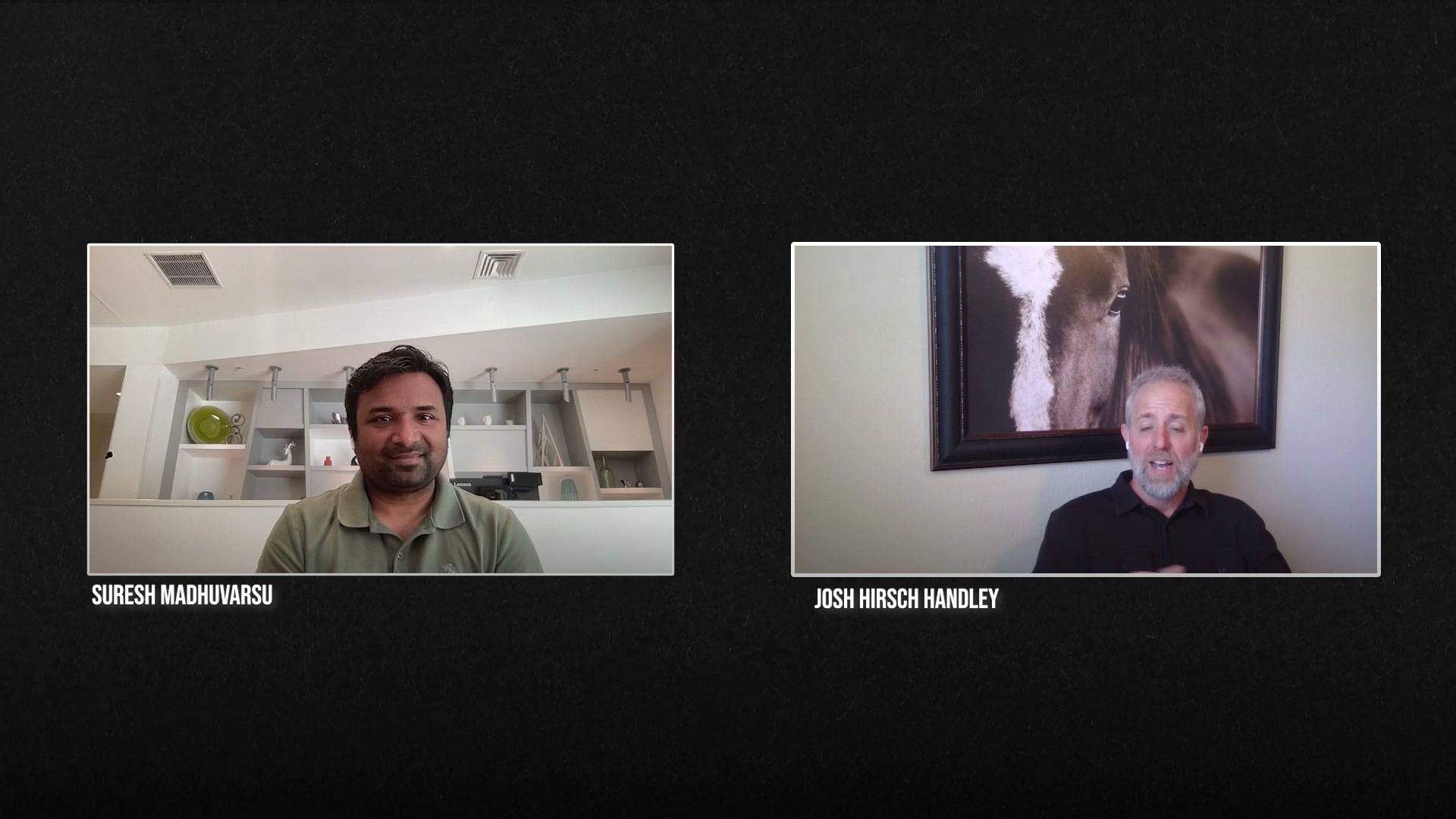
Suresh Madhuvarsu recognized the pattern immediately. Leads can sit inside the CRM while the founder handles a client onboarding, fixes a product issue, or answers a question no one else can answer. It looks like poor time management from the outside. In reality, the business has built no independent route from interest to next step.
The crucial transition is not from founder to sales rep. It is from private knowledge to shared operating logic. What does a qualified opportunity look like? Which questions reveal urgency? What evidence moves a deal from one stage to the next? Who follows up, when, and with what? A new seller cannot reproduce instincts that have never been made visible.
The founder-dependency curve
An illustrative model of what happens as company demands consume founder bandwidth
Illustrative, based on Josh's description of revenue slowing as founder attention shifts elsewhere. This is a conceptual model, not measured company data.
Coaching improves people. Infrastructure improves predictability
Coaching and infrastructure solve different problems. Coaching can make a rep more curious, more disciplined, or better at discovery. Infrastructure decides whether the business has a defined process, usable CRM data, a sensible hiring method, stage criteria, accountability, and a forecast grounded in evidence.
Coaching improves behavior. The infrastructure is more about improving predictability.Josh Hirsch Handley
A rep can make 150 calls a day and still learn nothing if no one tracks connection rates, conversations, meetings, or pipeline created. The work feels intense because it is intense. Yet without a feedback system, the company cannot tell whether the script is wrong, the list is wrong, the offer is wrong, or the rep needs help.
That capacity problem is bigger than sales. In Salesforce's 2026 State of Sales research, based on more than 4,000 sellers, the average rep reported spending only 40% of the workweek selling. The other 60% goes to preparation, administration, prospecting, quoting, planning, and other work. The point is not that every non-selling task should disappear. It is that a business cannot scale by pretending the supporting system will build and run itself.
The Revenue Infrastructure Stack
Process defines the path. Evidence defines when a deal advances. Ownership defines who acts next. Inspection reveals drift. Learning turns outcomes back into better scripts, lists, offers, and coaching.
You cannot hire a unicorn into a system you have not built
The first sales hire often arrives wrapped in magical expectations. Founders want someone affordable who can prospect, run discovery, demo the product, build the CRM, engineer solutions, follow up perfectly, and close through charisma. Josh's point is blunt: that person is not a hiring plan. It is a bundle of jobs the company has not separated yet.
Founders also tend to conduct weak interviews. Every candidate receives the same predictable questions and the most practiced interviewer wins. Charisma looks like selling ability because the candidate is selling themselves. But the traits that make a system work are often quieter: asking good questions, controlling a conversation without dominating it, following instructions, and responding well when corrected.
Josh's preferred test is coachability in the room. Give the candidate a piece of specific feedback, then let them try again. Do they process it and change? Or do they explain why the first attempt was already right?
| Interview signal | What to test | What to watch |
|---|---|---|
| Question quality | Give an incomplete buyer scenario | Do they diagnose before pitching? |
| Detail orientation | Ask for a short pre-work task with exact instructions | Do they follow the brief without reminders? |
| Coachability | Offer one clear correction and repeat the exercise | Do they apply feedback or defend the first attempt? |
| System discipline | Ask how they would document a deal and its next step | Do they create evidence another person could use? |
Suresh added a telling example from his own hiring. Roughly 500 people applied for a role. Candidates were asked to submit a two-minute video. Only five did it. The task did not prove who could sell. It did reveal who noticed and followed a simple instruction, which is information a standard interview can easily miss.
A big pipeline can be a warm blanket, not a forecast
Nothing creates false comfort like a CRM full of opportunities. Josh described inspecting one company's pipeline of roughly 250 to 260 deals and finding that only 18 were genuinely possible. Some had not been touched for eight months. They were not active opportunities. They were nurture records wearing pipeline labels.
What happened when one pipeline was inspected
A single company example from Josh's episode, shown as an anecdote rather than a benchmark
The starting point is shown as 255, the midpoint of Josh's approximate 250 to 260 range. Eighteen plausible deals equals about 7.1%. This is one case, not a cross-company conversion rate.
There is an emotional reason teams keep dead deals alive. A large pipeline protects the story that the quarter is still salvageable. Cleaning it feels like losing revenue, even though no revenue was removed. Only fiction was.
Josh's red flag is inactivity. An opportunity with no meaningful contact, no buyer-owned next step, and no evidence of movement should not remain in active pipeline because someone might answer one day. Move it to nurture. Keep the relationship warm with something useful. But stop letting it distort the forecast.
The Pipeline Truth Test
An active deal needs four things: a known problem, a buyer who has engaged, a dated next action, and evidence that the opportunity has moved recently. If one is missing, inspect it. If several are missing, it is probably nurture.
Hustle can reach $1 million. Delegation creates the next chapter
Josh uses a useful boundary: hustle can get a business to $1 million in annual recurring revenue. That first chapter rewards founders who solve problems personally and move fast. It can even make "I got it" feel like the correct leadership philosophy.
You really don't scale by doing more.Josh Hirsch Handley
The same habit becomes expensive on the way from $1 million to $10 million. More customers mean more support, more edge cases, more hiring, more management, and less uninterrupted selling time. The founder cannot keep solving every exception without becoming the queue.
Delegation does not always mean a full-time hire. Josh uses specialized contractors, including different CRM experts for different kinds of work, instead of expecting one generalist to be excellent at everything. The principle is to delegate work that is valuable, time-consuming, and outside your strongest contribution to someone who can build a repeatable result.
Activity is an input. Outcomes are the metric
Josh opens the episode by drawing a line most dashboards blur. Activity matters, but the result of the activity matters more. Five hundred emails with no replies is not automatically better than 20 emails that create two conversations. One hundred and fifty calls with no appointments is not better than five calls that produce three.
This is not an argument for low activity. A team without enough volume may not have enough signal to learn. It is an argument against celebrating motion without tracing it to an outcome. Count the activity, then follow the chain: connection, conversation, qualified next step, pipeline movement, closed revenue. The moment the chain breaks is where the team needs to inspect.
That distinction matters in a market where irrelevant volume can actively repel buyers. Gartner reported in 2026 that 73% of B2B buyers actively avoid suppliers that send irrelevant outreach. More activity aimed at the wrong person with the wrong message can create more negative outcomes, faster.
The Friday Revenue Reliability Loop
Josh's one thing for every founder to inspect weekly is the pipeline. Not the headline number. The actual deals. A simple Friday review can turn that advice into an operating rhythm.
- Open every late-stage deal. Do not review only the dashboard. Read the record.
- Check the last meaningful buyer interaction. Automated email does not count as progress.
- Find the buyer-owned next step. A seller's intention to follow up is not a mutual action.
- Challenge the stage. Ask what evidence proves the opportunity belongs there.
- Name one owner and one date. Shared ownership often means no ownership.
- Move stale opportunities to nurture. Keep the relationship, remove the false forecast.
- Feed the pattern back into the system. If several deals fail at the same point, fix the process, offer, enablement, or qualification rule.
The loop is deliberately ordinary. Revenue infrastructure is not an 85-page playbook sitting in a folder. It is the set of things that happen, are inspected, and improve whether or not the founder remembers to intervene.
Key takeaways
- Founder-led sales reaches its ceiling when deal movement depends on founder availability.
- Coaching improves individual behavior; infrastructure makes revenue more predictable.
- Hire for question quality, instruction-following, and coachability, not charisma alone.
- Stale opportunities belong in nurture, not in the forecast.
- Track activity, but manage the outcome chain it is supposed to create.
- Inspect the real pipeline every week and feed repeated failures back into the system.
FAQ
When has founder-led sales reached its ceiling?
The clearest signs are operational: revenue slows when the founder is busy, deals sit without follow-up, no one else can run discovery confidently, and every unusual buyer request comes back to the founder. The business may still be growing, but the process cannot move independently.
What is the difference between sales coaching and revenue infrastructure?
Coaching improves how an individual behaves. Revenue infrastructure creates predictable outcomes through process design, CRM discipline, evidence-based stages, hiring, inspection, and forecasting. A company needs both, but coaching cannot compensate for a missing system.
How should founders test sales candidates for coachability?
Give the candidate one specific piece of feedback during the interview, then ask them to repeat the exercise. A coachable candidate will process the note and make an observable adjustment. Defensiveness, excuse-making, or refusal to change is useful evidence too.
What should a founder inspect every week?
Inspect the pipeline deal by deal. Check last contact, next action, stage evidence, ownership, and recent movement. Move stale opportunities to nurture so the forecast reflects what buyers are doing, not what the team hopes they might do.
Josh's full conversation with Suresh goes further into founder capacity, the broken interview process, specialist contractors, pipeline flow, and the weekly discipline required to make revenue less dependent on heroics. Listen to the complete episode of Revenue Under Pressure and subscribe for the next field-tested playbook.