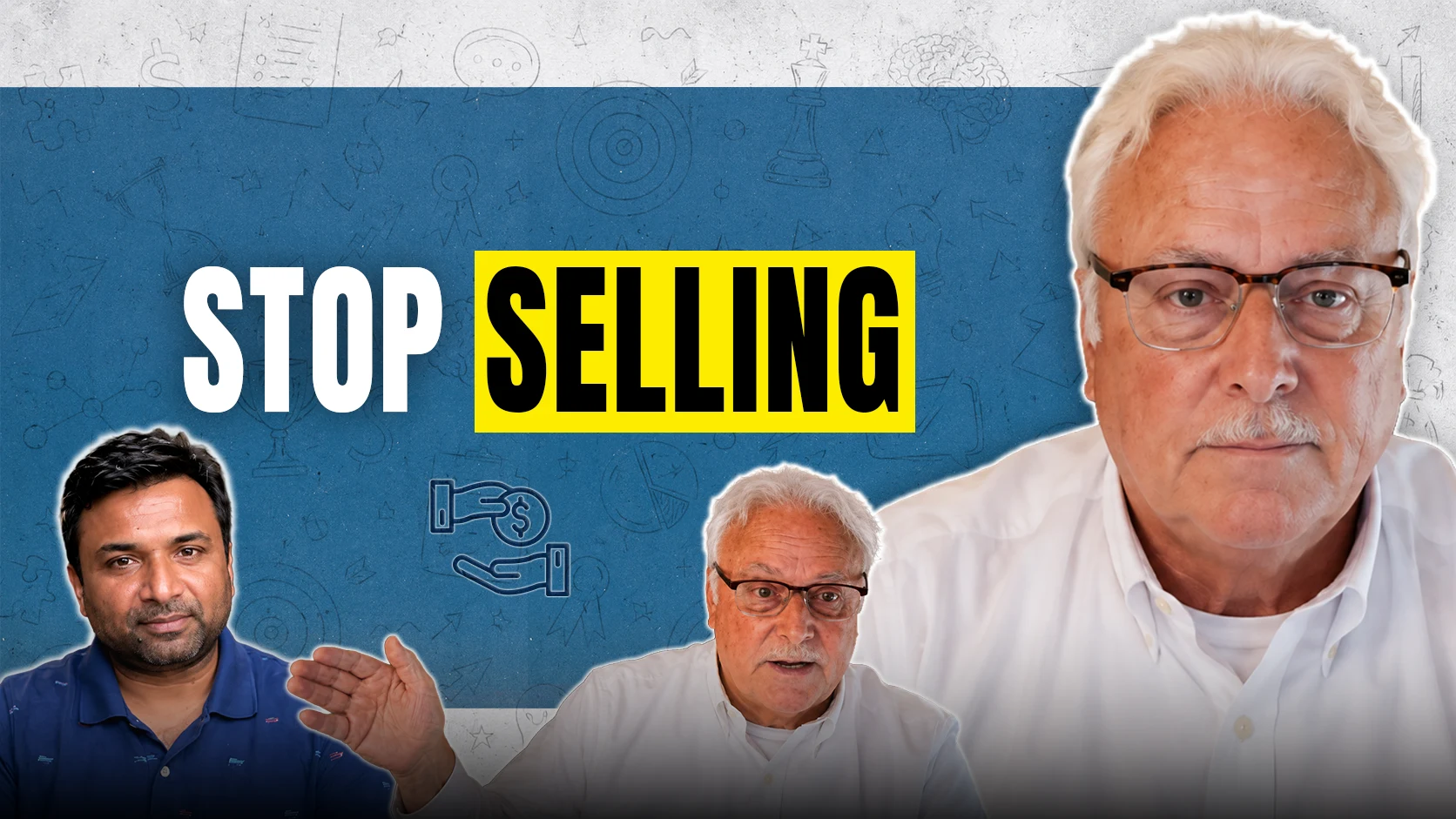
Higher-education buyers do not say yes when they finally understand your feature list. They say yes when they trust that you understand the institution, its mission, its internal politics, and the consequences of getting the decision wrong. Kim Coon, founder and CEO of Bluewave Global Services, has spent decades across education, government, strategic partnerships, leadership development, and business growth. His argument is simple: in an institutional sale, patience is not what you do while waiting for revenue. It is part of how revenue gets earned.
In this article
- Trust is the first qualification stage
- Earn the right to help before you claim it
- You cannot automate a relationship into existence
- A vendor delivers. A partner stays when things turn south
- Emotion opens the door. Outcomes keep it open
- Features are the fastest way to lose an institutional buyer
- The enrollment cliff raises the stakes, not your permission to push
- FAQ
Trust is the first qualification stage
Most sales processes begin qualification with need, budget, authority, and timing. Kim puts something ahead of all four: has the buyer decided you are worth talking to?
That is a harder threshold in higher education than many outsiders expect. Presidents, provosts, deans, faculty leaders, and finance executives are approached constantly. They are accountable to different constituencies, and a new initiative can create academic, financial, political, and reputational consequences at once. A seller does not arrive as a neutral source of help. A seller arrives as another person asking the institution to take a risk.
To begin to build trust, you have to earn it. You just can't assume that a president is just going to talk with you.Kim Coon
Kim's opening move is therefore deliberately modest. Get to know the institution. Learn the need. Introduce yourself without pretending a relationship already exists. Ask for a few minutes, not the right to run a full discovery process. That posture removes some of the presumption buyers have learned to expect.
This does not mean being vague or passive. Kim advocates arriving with a point of view grounded in research: I have done my homework, I believe I understand a specific need, and I may have a relevant solution. Would you give me a few minutes to see whether that belief is right?
Earn the right to help before you claim it
In the episode's rapid-fire section, Suresh asks what institutions hate hearing from sellers. Kim's answer is a phrase used in thousands of prospecting messages: "I'm here to help you." The problem is not the desire to help. It is claiming the role before understanding the work.
The Earned Right to Help
Research a public priority. Ask permission for a small conversation. Diagnose before presenting. Practice patience while the buyer decides whether the next step is deserved.
Here is what that can look like in a first outreach to a university:
- Research one declared priority. Use the strategic plan, accreditation materials, public board minutes, enrollment reporting, or a leader's own remarks. Do not manufacture a problem from a generic industry statistic.
- Name the context without overstating it. "I saw the university has made first-year persistence a priority" is credible. "I know exactly why your students leave" is not.
- Offer a hypothesis, not a diagnosis. Explain why your experience may be relevant, then ask for 10 or 15 minutes to test the fit.
- Leave room for no. If the problem is not a priority, learn that early. If it is, agree on one next step instead of forcing a full product tour.
That sequence is slower than dropping a calendar link into an automated email. It is also far more respectful of how institutional buyers make decisions. The seller earns access in increments.
You cannot automate a relationship into existence
Sales teams are being asked to move faster while buyers are doing more independent research. Those pressures make automation useful for preparation, routing, reminders, and administrative work. They do not make trust compressible.
You can't fast-track that. You just simply cannot fast-track it in the higher ed space.Kim Coon
Kim is not arguing for ceremonial delay. If procurement can be clearer or scheduling can be easier, improve it. His point is that an institution's pace often reflects real work: aligning constituencies, testing whether an initiative supports the mission, assessing financial risk, and making sure the people expected to live with the decision understand it.
A broader B2B pattern supports that distinction. Gartner's 2026 buyer research found a strong preference for digital self-service, yet 69% of buyers preferred to validate AI-generated information with a sales representative. Buyers may want control over the journey and still want a capable human when the consequence of being wrong rises.
A vendor delivers. A partner stays when things turn south
Every partner begins as a vendor. The difference is not what the contract calls the relationship. It is what happens when the implementation disappoints, the timeline slips, or the institution faces pressure.
The best signal that a partnership is real is when things begin to take a little bit of a dip, they're turning south, and your client doesn't bolt. They stay with you.Kim Coon
Kim says moving from vendor to partner takes discipline because the incentives push the other way. The seller feels pressure to jump to the close. The buyer can usually feel that pressure too. Institutional leaders are experienced enough to distinguish someone trying to complete a transaction from someone trying to understand what a durable outcome requires.
The vendor-to-partner progression
An illustrative continuum based on Kim's description of long-term intentionality
Illustrative. Partnership is shown as a progression of behavior, not a score or measured maturity model.
The final stage is the one a seller cannot prove in a pitch. It appears only after something goes wrong. A partner stays candid, helps the institution recover, and remains accountable to the outcome. That is when "long-term relationship" stops being positioning language.
Emotion opens the door. Outcomes keep it open
Kim describes one principle as a true north, while making clear that the phrasing is not his own and that he cannot recall its original source: you cannot move people to action unless you first move them with emotion. The heart comes before the head.
That idea can sound soft until you translate it into an institutional decision. Emotion here is not theatrical storytelling. It is whether a president believes you respect the mission, whether a dean feels you understand the faculty's concern, whether a CFO trusts that you see the downside risk, and whether the people responsible for students believe you care what changes for them.
Logic still decides whether the solution survives scrutiny. Price, implementation, evidence, security, academic quality, and measurable outcomes all matter. But facts delivered before relevance feel like a presentation. Facts delivered after the buyer feels understood become useful.
Features are the fastest way to lose an institutional buyer
Kim explains feature-heavy selling through the story of his wife buying a car. The salesperson wanted to explain what was under the hood. She wanted to drive it. The feature was real, but it was not the outcome she cared about.
Institutional selling multiplies that problem because one solution can mean something different to every constituency. Faculty may ask whether quality or curriculum will be compromised. The CFO may ask how the economics work. A senior administrator may worry about adoption and internal resistance. The people doing the day-to-day work may see a burden the executive buyer cannot see.
| Stakeholder | Likely outcome question | Evidence to prepare |
|---|---|---|
| President or provost | Does this advance the institution's strategy and reputation? | Strategic alignment, peer examples, governance plan |
| Dean or faculty leader | Will quality, curriculum, or academic control suffer? | Academic safeguards, implementation detail, faculty voice |
| CFO | What changes financially, and what is the downside? | Total cost, realistic value case, risk scenarios |
| Operating team | What becomes easier or harder in the actual workflow? | Process map, workload impact, support model |
A strong institutional pitch is therefore not one story repeated four times. It is one shared outcome translated into four legitimate definitions of value and risk.
The enrollment cliff raises the stakes, not your permission to push
Kim speaks about a higher-education market under pressure, including the demographic enrollment cliff. That pressure is real, but the current picture deserves precision. WICHE projects the number of US high-school graduates will peak at about 3.9 million in 2025 and fall to about 3.4 million by 2041, a 13% national decline. The impact will vary sharply by state, region, and student population.
The demographic pipeline is projected to narrow
US high-school graduates, WICHE projection
Source: WICHE, Knocking at the College Door, December 2024. Values are rounded national projections and do not describe every region equally.
This is not an overnight collapse in all postsecondary enrollment. The National Student Clearinghouse reported 18.6 million students enrolled in spring 2026, up 1% year over year, with undergraduate enrollment up 1.3% and graduate enrollment nearly flat. The responsible reading is that institutions face uneven, long-run demographic and competitive pressure while short-run enrollment can still grow.
For sellers, that context creates urgency to understand the institution, not permission to force a faster close. A generic claim about the enrollment cliff tells a university something its leaders already know. A useful seller connects a specific institutional priority to an evidence-based outcome, then gives the stakeholders space to decide whether the relationship should advance.
Key takeaways
- Trust is not a soft prelude to qualification. It is the first qualification stage.
- Do the homework, offer a hypothesis, ask permission, and diagnose before presenting.
- Automation can remove friction, but it cannot compress institutional trust.
- A real partner is revealed when the work becomes difficult, not when the contract is signed.
- Translate one shared outcome into each stakeholder's definition of value and risk.
- Market pressure should sharpen relevance, not justify aggressive selling.
FAQ
Why does trust matter so much in higher-education sales?
Institutions are complex, mission-driven, and accountable to many groups. A buyer needs confidence that the seller understands those consequences before seriously evaluating the solution. Trust makes the conversation possible; it does not replace evidence or procurement.
Can the higher-education sales cycle be accelerated?
Administrative friction can be reduced, but trust and stakeholder alignment cannot be skipped. Moving too quickly can make a seller seem presumptuous and create more resistance. Kim's advice is to earn each next step instead of trying to jump to the close.
What is the difference between a vendor and a partner?
A vendor delivers the contracted product or service. A partner understands the institution's outcomes, stays accountable through problems, and remains committed when the relationship becomes difficult. The distinction is proven through behavior over time.
How do sellers earn the right to help an institution?
Research a specific public priority, ask permission for a brief conversation, diagnose before presenting, and let the buyer decide whether the next step is warranted. The goal is not to sound helpful. It is to demonstrate enough understanding that help becomes credible.
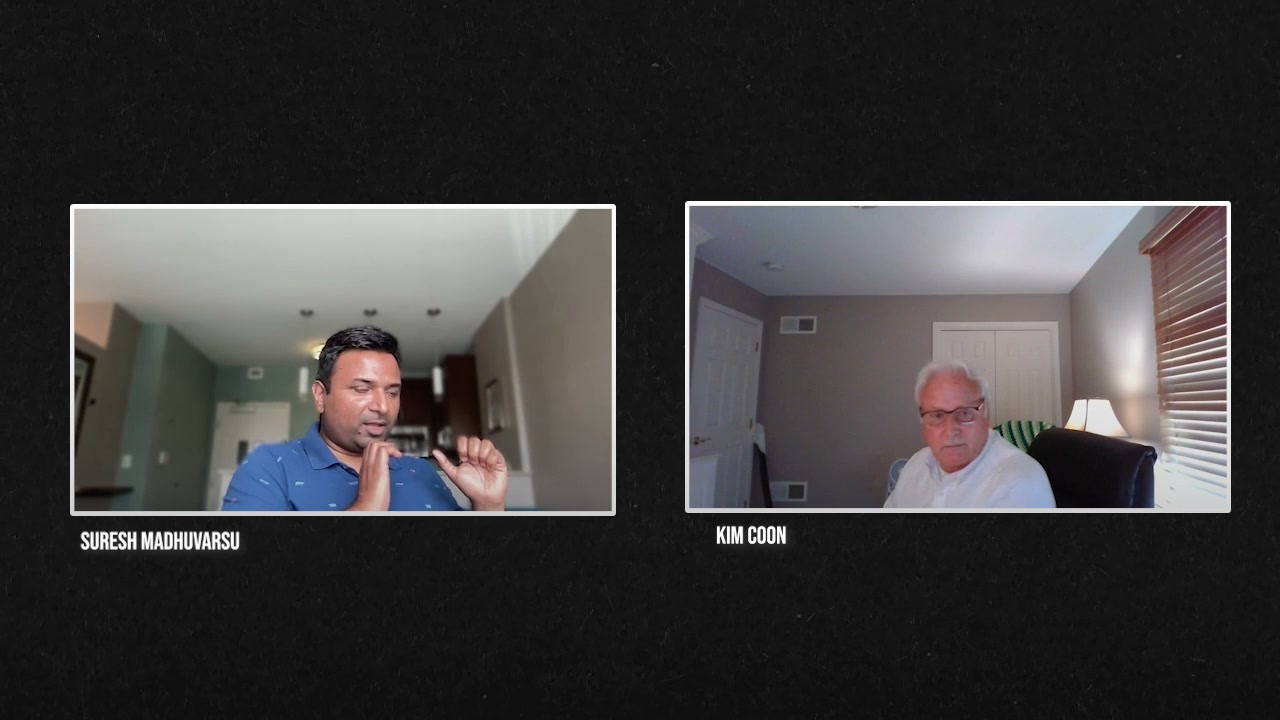
Kim's full conversation with Suresh explores empathy, institutional decision-making, reputation, stakeholder outcomes, patience, and the discipline required to turn a transaction into a partnership. Listen to the complete episode of Revenue Under Pressure and subscribe for more conversations from high-stakes revenue teams.